Trailer Inspection Preventive Maintenance
How Often Should Commercial Trailers Be Inspected and Maintained?
Understand inspection intervals, federal periodic-inspection requirements, and preventive-maintenance planning for commercial trailers.
Quick Answer
Covered commercial trailers need a qualifying periodic inspection at least once every 12 months, but maintenance should not wait for that inspection date.
Fleets should combine driver observations, prompt defect reporting, routine checks, and scheduled preventive maintenance based on equipment design, utilization, duty cycle, operating environment, repair history, and manufacturer guidance. The federal periodic inspection is an important compliance requirement—not a universal service interval for brakes, tires, wheel ends, or every other component.
Build Layers of Inspection
How Often Should a Commercial Trailer Be Inspected?
A trailer should be checked often enough to find defects before they interfere with safe operation or cause an unplanned stop. A federal periodic inspection reviews the unit against defined minimum standards, while everyday fleet reliability depends on the checks and maintenance performed between periodic inspections.
A high-mileage dry van running long interstate routes does not experience the same use as a lightly utilized local trailer, a refrigerated unit, or equipment exposed to construction sites and rough yards. Age, mileage, load, road conditions, weather, salt, moisture, previous repairs, and long periods of storage can all change what needs attention and how soon.
Driver Observations & Pre-Use Checks
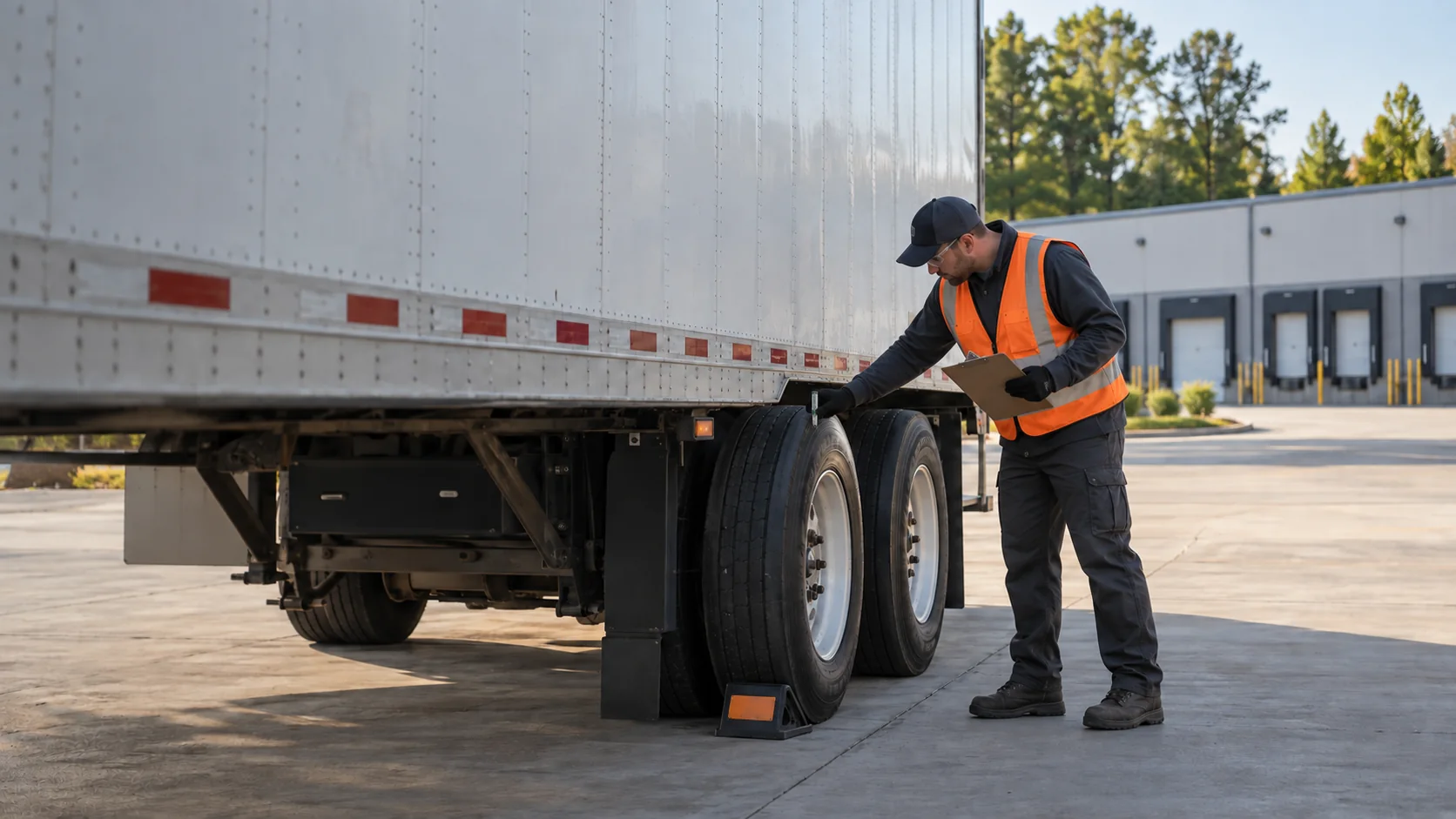
Watch for visible damage, tire concerns, air loss, lighting failures, loose components, and other conditions that could affect safe operation. Follow the inspection and reporting rules that apply to the operation.
Routine Fleet Checks
Use a repeatable shop or yard inspection based on utilization, operating conditions, previous defects, and the fleet's written policy.
Preventive Maintenance
Schedule component service by time, mileage, duty cycle, condition, and the equipment manufacturer's recommendations.
Federal Periodic Inspection
Covered commercial motor vehicles must receive a qualifying periodic inspection at least once every 12 months.
Driver awareness
Before Use
Visible condition, tires, lights, air loss, secure components, and newly reported defects.
Based on use
Scheduled
Deeper inspection and service at intervals matched to duty cycle, history, and manufacturer guidance.
Periodic inspection
Annual
A qualifying inspection at least once every 12 months for covered commercial motor vehicles.
A Complete-Unit View
What Is Included in a Trailer Inspection?
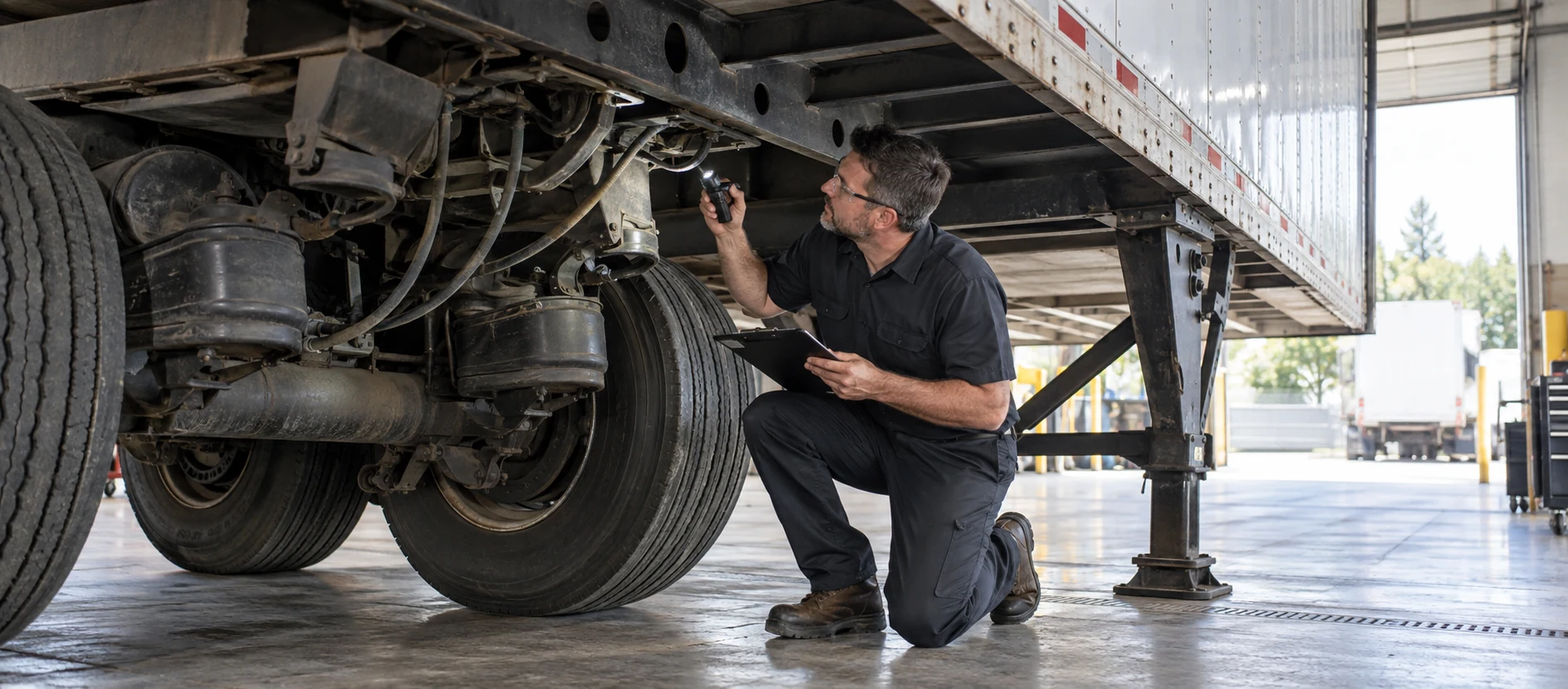
The exact checklist depends on whether the work is a driver check, a preventive-maintenance inspection, a focused diagnostic inspection, or a federal periodic inspection. A useful trailer inspection follows each safety-critical system far enough to find both the visible defect and related wear that could cause the same problem to return.
Inspection should also account for the trailer's configuration and installed equipment. A reefer, liftgate, intermodal chassis, flatbed, or specialty trailer may have additional systems and manufacturer procedures beyond a general dry-van checklist. Fleet records should identify those differences so technicians know which items apply to each unit.
Federal Periodic Inspection
What Is a DOT Annual Trailer Inspection?
“DOT annual inspection” commonly refers to the periodic inspection required under 49 CFR 396.17. Each vehicle in a combination, including the trailer, is subject to that requirement at least once during the preceding 12 months. One inspection document may cover the combination if it clearly identifies every vehicle inspected.
The inspection must address the applicable Minimum Periodic Inspection Standards in Appendix A to Part 396, and the person performing it must meet the applicable qualification requirements. A carrier may use a qualified inspector or an accepted state inspection program when the program satisfies the federal requirements. The inspector's report must identify the inspector, vehicle, inspection date, components inspected, and results. The entity responsible for the inspection generally must retain the report for 14 months; documentation of the most recent qualifying inspection must be on the vehicle.
This page is a practical maintenance overview, not legal advice or a substitute for the current regulations. Carriers should confirm which federal and state requirements apply to their operation and review the current rule before relying on an inspection program.
Correct Defects Before Dispatch
What Can Cause a Trailer to Fail Inspection?
A trailer may fail when an applicable inspection item does not meet the required standard or when a condition makes the unit unsafe to operate. Some defects are obvious, such as a broken light or visibly damaged tire. Others require measurement, component access, system testing, or a trained evaluation to determine whether repair is necessary.
Brake Defects
Worn, contaminated, damaged, inoperative, or improperly adjusted brake components and related air-system faults.
Tire & Wheel Damage
Unsafe tread, exposed material, cuts or bulges, damaged rims, loose fasteners, or wheel-end concerns.
Lighting Failures
Inoperative required lamps, damaged wiring, poor grounds, broken connectors, or missing conspicuity markings.
Air-System Leaks
Leaks or damage involving hoses, fittings, reservoirs, valves, chambers, or other pneumatic components.
Suspension Damage
Cracked or displaced springs, damaged air bags, worn mounting hardware, axle concerns, or insecure components.
Structural Problems
Cracks, broken welds, severe corrosion, damaged crossmembers, landing-gear defects, or compromised coupling areas.
Passing an inspection only confirms the condition observed at that time. It does not guarantee that a component will remain serviceable until the next periodic inspection. New damage, leaks, wear, loose hardware, warning lights, heat, vibration, or driver-reported changes should be evaluated when they appear.
How Often Should Trailer Brakes, Tires, and Wheel Bearings Be Checked?
Trailer Brakes
Brake inspection frequency should account for mileage, stop frequency, load, terrain, heat, contamination, wear history, and the brake system's design. Drivers and maintenance teams should treat poor braking, pulling, abnormal noise, dragging, pressure loss, air leaks, ABS warnings, or unusual heat as reasons for prompt evaluation—not reasons to wait for the next calendar interval.
Trailer Tires
Tires benefit from frequent visual and inflation checks because a small pressure loss, embedded object, sidewall injury, or developing wear pattern can worsen quickly under load. Irregular wear can also point to alignment, suspension, axle, bearing, inflation, or loading problems. Replacing the tire without investigating the cause may allow the same pattern to return.
Wheel Bearings & Hubs
Wheel-end service should follow the specific axle, hub, seal, lubricant, and trailer manufacturer's procedures. Fleets should also respond to lubricant loss, damaged hubcaps or seals, looseness, heat, odor, vibration, noise, contamination, or previous wheel-end work. A universal mileage number would ignore important differences between sealed, oil-lubricated, grease-lubricated, and other wheel-end systems.
Turn Findings Into Action
What Should Fleet Managers Include in a Trailer Maintenance Program?
A maintenance program should tell drivers, dispatchers, managers, and technicians what gets checked, when it gets checked, how defects are reported, who decides the repair priority, and how the fleet confirms that work was completed. A calendar alone is not enough; the program needs a feedback loop between daily operation and planned shop work.
Good records help a fleet see more than due dates. If the same light circuit, seal, tire position, door, suspension part, or brake concern keeps returning, the history may reveal a related root cause, a duty-cycle mismatch, an installation issue, or a maintenance interval that needs adjustment. Records also make it easier to prepare units for seasonal demand and schedule repairs before a trailer is committed to a load.
Local Fleet Support
Commercial Trailer Inspection and Maintenance Near Atlanta
JC Trailmaster supports owner-operators and commercial fleets from its Ellenwood shop across metro Atlanta and surrounding communities. The team works across brake and air systems, suspension, axles, wheel ends, electrical systems, doors, floors, frames, chassis components, and other trailer repairs that may be identified during inspection.
Call with the trailer type, fleet size, operating pattern, current symptoms, inspection due dates, and any available repair history. JC Trailmaster can discuss an in-shop inspection, preventive-maintenance work, repair needs, or eligible mobile service during business hours. Scope and scheduling depend on the equipment, condition, access, parts, and current workload.
Areas We Serve
Commercial Trailer Maintenance Questions
Trailer Inspection and Maintenance FAQs
How often should a commercial trailer be inspected?
There is no single interval that replaces every other check. Covered commercial motor vehicles require a qualifying periodic inspection at least once every 12 months under 49 CFR 396.17. Driver checks, defect reviews, routine fleet inspections, and preventive maintenance may need to occur much more often based on use, condition, manufacturer guidance, and the carrier's maintenance program.
What is included in a trailer inspection?
The scope depends on the inspection. A thorough commercial-trailer inspection commonly reviews brakes and the air system, tires and wheel ends, suspension and axles, lighting and electrical equipment, coupling components, frame and body condition, landing gear, doors, floor, and other equipment applicable to the trailer. A qualifying federal periodic inspection must cover the applicable Minimum Periodic Inspection Standards in Appendix A to Part 396.
What is a DOT annual inspection?
The term usually refers to the periodic inspection required by 49 CFR 396.17 for covered commercial motor vehicles. It must be completed at least once during the preceding 12 months, cover the applicable minimum inspection items, and be performed by a qualified inspector. The carrier should confirm that the inspection method and documentation satisfy the rules that apply to its operation.
What can cause a trailer to fail inspection?
Common problems include defective brakes, air leaks, unsafe tires, wheel or rim damage, lighting failures, insecure suspension parts, coupling defects, frame cracks, severe corrosion, and other conditions that fail an applicable inspection standard or make the unit unsafe to operate. The specific result depends on the inspection type and the condition found.
How often should trailer brakes be inspected?
The federal periodic inspection is a minimum inspection requirement for covered vehicles; it is not a universal brake-service interval. Brake checks should also be built into driver observations, defect reporting, routine fleet inspections, and preventive maintenance based on duty cycle, mileage, wear, past repairs, manufacturer guidance, and carrier policy.
How often should trailer tires be checked?
Tires should be observed frequently enough to catch inflation loss, tread wear, cuts, bulges, exposed material, irregular wear, and wheel-end warning signs before the trailer is dispatched. Fleets should define the exact process and frequency around their operating conditions, applicable rules, and tire or equipment guidance rather than relying only on a periodic inspection.
What trailer components require preventive maintenance?
A practical program covers safety-critical and wear items across the trailer, including brakes, air-system components, tires, wheel ends, suspension, axles, lights, wiring, doors, landing gear, coupling areas, floors, frames, and body components. The schedule should reflect the equipment type and how it is actually used.
How often should trailer wheel bearings be serviced?
Service intervals vary by trailer and wheel-end design. Follow the axle, hub, seal, lubricant, and trailer manufacturers' procedures, then adjust the program for mileage, duty cycle, inspection findings, contamination, heat events, leaks, and repair history. Heat, noise, looseness, or lubricant loss deserves prompt inspection.
Why is preventive trailer maintenance important for fleets?
Preventive maintenance gives a fleet a chance to correct wear and developing defects before they create a roadside failure, missed delivery, inspection problem, cargo risk, or more extensive component damage. It also produces records that help managers see recurring issues and make better repair and replacement decisions.
What should fleet managers include in a trailer maintenance program?
Include a complete equipment list, inspection and service intervals, driver defect-reporting procedures, repair priorities, qualified personnel or vendors, parts and documentation standards, periodic-inspection tracking, closeout rules for reported defects, and periodic review of repeat failures and out-of-service events.
Related Atlanta Resource
What Does Semi-Trailer Repair Include?
Review the systems and repair categories Atlanta fleets commonly need, from brakes and suspension to electrical, structural, door, floor, and mobile-service work.
Read the Atlanta semi-trailer repair guide →25+
Years of Experience
10,000+
Repairs Completed
Insured
DOT Registered
#3782640
USDOT