Semi-Trailer Repair Atlanta, GA
What Does Semi-Trailer Repair Include?
A Guide for Atlanta Trucking Companies
From brake and suspension work to electrical diagnostics, structural repairs, and fleet maintenance, JC Trailmaster helps Atlanta-area carriers keep trailers road-ready.
Quick Answer
Semi-trailer repair includes the mechanical, electrical, structural, braking, air-system, wheel-end, and maintenance work needed to keep commercial equipment safe and road-ready.
JC Trailmaster serves Atlanta-area fleets and owner-operators from its Ellenwood shop, with in-shop and mobile options for dry vans, reefers, flatbeds, box trucks, and intermodal chassis. Inspection comes before the work plan so the repair addresses the failed component and any related damage—not only the first visible symptom.
Complete Repair Capabilities
What Are the Most Common Semi-Trailer Repairs?
Semi-trailers experience wear from mileage, vibration, weather, loading cycles, road conditions, and repeated coupling and uncoupling during commercial use. Common repair needs affect brakes, air systems, suspension, axles, bearings, tires, wiring, lighting, doors, floors, frames, and body components.
For a fleet, the repair plan should separate work that can hold a unit from wear that can be scheduled. It should also identify related checks that belong in the same downtime window—for example, inspecting the wheel end when brake heat is reported or checking the surrounding structure when a door opening moves out of square. That keeps urgent work, follow-up items, and routine maintenance from being mixed together on the work order.
Match the Plan to the Equipment
How Does Repair Planning Change by Trailer Type?
Trailer type changes both the inspection path and the consequence of downtime. On a dry van, a technician may need to look beyond a damaged panel or door and check the surrounding posts, header, floor, crossmembers, and seals. On a refrigerated trailer, the same running-gear and body concerns remain, but insulation, interior panels, door seals, and cargo-temperature requirements can change the repair decision. Work on the refrigeration unit itself is a separate capability that should be confirmed when scheduling.
Flatbeds place more emphasis on the deck, rub rails, securement points, landing gear, and visible frame or crossmember damage. Intermodal chassis require attention to the frame, suspension, brakes, tires, lights, coupling hardware, and container-locking components. Box trucks also involve the connection between the cargo body and the vehicle, so the service provider needs to know whether the concern is in the body, liftgate, chassis, or truck systems.
Before requesting service, identify the equipment type, unit number or VIN, make and model if known, load status, and the exact area affected. Mention any special cargo restrictions or access requirements. That information helps the shop determine what must be inspected, whether the location is suitable for mobile work, and which parts or equipment may be relevant without treating a photo or phone description as a diagnosis.
What Does a Professional Semi-Trailer Inspection Look For?
An inspection helps define the repair scope. The technician checks the affected system and related components, then identifies what needs attention now and what can be scheduled later.
For inspection schedules, annual requirements, and a fleet checklist, read our commercial trailer inspection and maintenance guide.
Build a Maintenance Rhythm
How Often Should Commercial Trailers Be Serviced?
Set service intervals around the trailer manufacturer's guidance, mileage, operating conditions, and repair history. Report new symptoms promptly so the shop can determine whether the trailer needs attention before its next scheduled visit.
Driver Checks
Routine pre-trip and post-trip observations can reveal visible damage, tire, light, brake, and air-system concerns.
Preventive Maintenance
Build service around mileage, time, duty cycle, equipment age, operating conditions, and manufacturer guidance.
Periodic Inspection
Covered commercial vehicles require a qualifying periodic inspection at least once every 12 months under 49 CFR §396.17.
Federal regulations require covered commercial vehicles, including each segment of a combination vehicle, to receive a qualifying periodic inspection at least once every 12 months. That annual requirement is a compliance baseline, not a substitute for driver checks, prompt repairs, or a preventive-maintenance schedule suited to the fleet.
What Causes Trailer Brake and Air-System Problems?
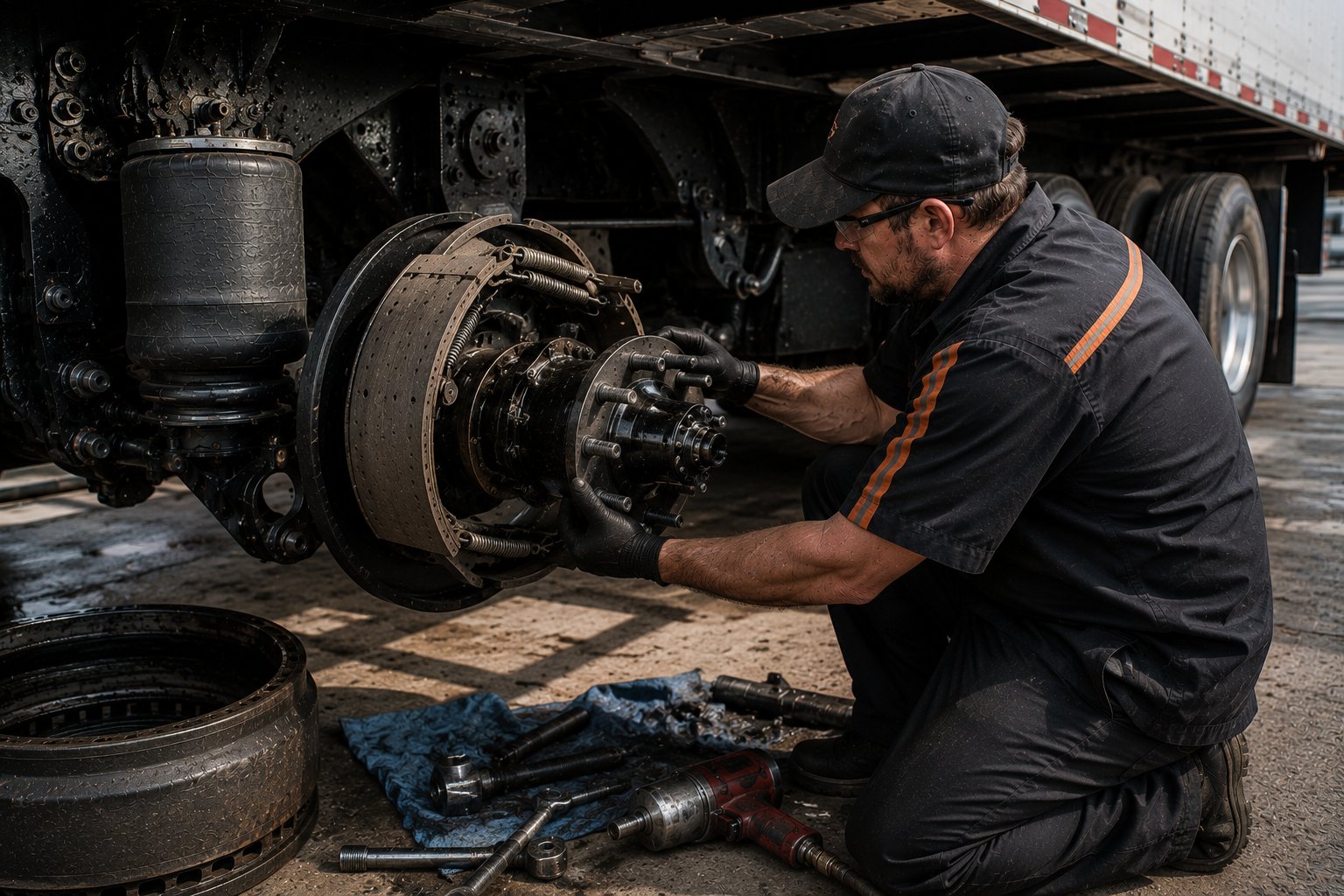
Brake concerns may result from normal wear, poor adjustment, damaged shoes or drums, contaminated friction surfaces, chamber problems, wheel-end issues, air-system faults, wiring damage, or ABS sensor problems. Air leaks can develop in hoses, fittings, valves, chambers, reservoirs, and connections as vibration, abrasion, weather, corrosion, or impact takes a toll.
Warning signs include poor stopping performance, pulling, unusual noise, brakes that fail to apply or release correctly, pressure loss, an audible leak, or an illuminated ABS light. Because trailer braking combines mechanical, pneumatic, and electrical components, diagnosis should consider the system as a whole.
When Does a Trailer Need Suspension, Axle, or Wheel-End Repair?
Schedule an inspection when a trailer leans, rides unevenly, tracks poorly, vibrates, produces unusual noise, develops abnormal tire wear, or shows visible damage to springs, air bags, hangers, bushings, torque arms, axles, or related components. Heat around a hub or wheel end also deserves prompt attention.
These symptoms can overlap. Tire wear may be caused by alignment, inflation, suspension, axle, bearing, or loading conditions. Replacing tires without correcting the cause can allow the same wear pattern to return. A technician should inspect the related systems before defining the repair.
Can Trailer Electrical Problems Be Diagnosed and Repaired?
Yes. Semi-trailer electrical work can include marker, brake, turn, and tail lights; wiring harnesses; connectors; grounds; junction boxes; ABS circuits; and related components. Problems may be constant or intermittent, which is why testing the circuit is often more effective than repeatedly replacing lamps or fuses.
Moisture, corrosion, damaged insulation, loose connections, poor grounds, vibration, and impact can all create faults. A systematic diagnosis identifies where power or signal is being lost and whether the visible failure is isolated or part of a larger wiring problem.
Turn Findings Into a Work Plan
How Should a Fleet Prioritize Trailer Repair Findings?
Start by separating defects that affect safe or lawful operation from wear that can be planned. Brake, tire, wheel-end, suspension, coupling, structural, and required-lighting concerns may justify holding the unit until a qualified person determines the proper next step. Follow the carrier's out-of-service policy and applicable regulations rather than using a general article to decide whether equipment can move.
Immediate decision
Address conditions that may affect braking, stability, wheel retention, load security, structural integrity, or required visibility before dispatch.
Prompt corrective work
Schedule leaks, intermittent electrical faults, alignment changes, door problems, and developing wear before they damage related components or disrupt a load.
Planned maintenance
Group non-urgent wear items with the next service window when the technician, fleet policy, and inspection requirements allow it.
Ask the repair provider to distinguish the failed component, related damage, recommended work, and items that only need observation. For multiple findings, ask whether they can be handled during one downtime window and whether additional disassembly or measurements could change the estimate. A useful work order records the complaint, diagnosis, completed repair, and any follow-up recommendation so the next service decision is based on history instead of memory.
Reduce Avoidable Downtime
What Should Fleet Managers Look for in a Trailer Repair Company?
Fleet service is easier to manage when one provider can handle routine inspections, preventive maintenance, mechanical and electrical diagnosis, structural repairs, and eligible mobile calls. Look for experience with the equipment in the fleet, clear repair recommendations, usable service records, and scheduling that accounts for operational priorities.
JC Trailmaster works with fleet managers and owner-operators across metro Atlanta. Ask about priority scheduling and billing accounts for repeat service. Availability and arrangements depend on the fleet's needs and should be confirmed directly with the team.
Prepare for a Useful First Call
What Information Helps a Trailer Repair Shop Prepare?
For fleet work, start with the unit number or VIN, trailer type, current location, loaded or empty status, and the time window when the equipment can be released. Include the driver's complaint in plain language, relevant warning lights, recent impacts or repairs, and safe photos of visible damage. If several trailers need attention, send a unit-by-unit list instead of combining different symptoms into one request.
Provide purchase-order or authorization requirements, the on-site contact, gate or dock instructions, and the person who can approve additional findings. Confirm whether the complete combination or only the trailer is needed and how estimates, completed work, and follow-up recommendations will be documented. Those details reduce dispatch delays and make the service record useful after the unit returns to operation.
When Should a Semi-Trailer Go to the Shop Instead of Receiving Mobile Service?
Mobile service can be a practical option for accessible repairs and diagnostics at yards, docks, and roadside locations. The shop is generally better for extensive structural work, collision damage, fabrication, repairs requiring specialized equipment, and jobs that need controlled access to the complete unit.
Call with the trailer type, location, symptoms, load status, and any visible damage. JC Trailmaster can help determine whether mobile service during business hours is appropriate or whether the unit should be brought to the Ellenwood facility. Arrival and completion timing depend on the diagnosis, location, parts, and current workload.
Local Service for Atlanta Fleets
Semi-Trailer Repair Near Atlanta
JC Trailmaster's Ellenwood location serves commercial equipment operating throughout metro Atlanta. The shop works with fleets and owner-operators from communities across the service area, including McDonough, Conyers, Fairburn, Marietta, and other nearby cities.
Areas We Serve
Questions From Atlanta Fleets
Semi-Trailer Repair FAQs
Where can I get semi-trailer repair in Atlanta?
JC Trailmaster serves Atlanta-area trucking companies from its shop at 5225 John G Glover Ind Ct, Ellenwood, GA 30294. In-shop and mobile options are available depending on the equipment, repair, location, and schedule. Call 770-906-4781 to discuss the unit and symptoms.
What are the most common semi-trailer repairs?
Common work includes brakes and ABS, air-system leaks, suspension, axles and bearings, tires, electrical and lighting faults, doors, floors, crossmembers, frames, and collision damage. Preventive maintenance can identify many of these problems before they interrupt a route.
How often should commercial trailers be serviced?
There is no single preventive-maintenance interval that fits every fleet. Build the schedule around mileage, calendar time, duty cycle, equipment age, manufacturer guidance, inspection findings, and repair history. Covered commercial vehicles also require a qualifying periodic inspection at least once every 12 months under federal rules.
What causes trailer brake problems?
Brake concerns may result from wear, poor adjustment, contaminated friction surfaces, damaged drums or shoes, chamber or air-system faults, wheel-end issues, wiring faults, or ABS sensor problems. A complete diagnosis is more reliable than replacing the first visibly worn part.
What causes a semi-trailer air leak?
Leaks can develop in hoses, fittings, valves, chambers, reservoirs, or connections. Weather, vibration, abrasion, corrosion, impact damage, and normal wear can all contribute. Air-pressure loss should be inspected promptly because it can affect braking and safe operation.
When does a trailer need suspension, axle, or wheel-end repair?
Arrange an inspection for uneven tire wear, vibration, unusual noise, wheel-end heat, poor tracking, an uneven ride height, a leaning trailer, or visible component damage. These symptoms may have more than one cause, so diagnosis matters.
Can trailer electrical problems be diagnosed and repaired?
Yes. JC Trailmaster diagnoses and repairs lighting, wiring, grounds, connectors, harnesses, junction boxes, ABS electrical faults, and related components. Intermittent problems often require systematic testing rather than repeated part replacement.
Does JC Trailmaster work with fleets and repeat accounts?
Yes. Fleet managers can discuss preventive maintenance, inspections, priority scheduling, and account arrangements intended to simplify repeat service across multiple units.
Looking for the Local Guide?
Trailer Repair in Ellenwood, GA
See the complete local guide to available repairs, warning signs, mobile service, and choosing a trailer repair provider near the shop.
Read the Ellenwood trailer repair guide →25+
Years of Experience
10,000+
Repairs Completed
Insured
DOT Registered
#3782640
USDOT