Semi-Trailer Problems Repair Guide
What Are the Most Common Semi-Trailer Problems? A Troubleshooting Guide
Learn the warning signs, likely causes, and repair options for the trailer problems fleets and owner-operators encounter most often.
Quick Answer
The most common semi-trailer problems involve brakes and air systems, tires and wheel ends, suspension and axles, lighting and ABS, doors, floors, and structural components.
Drivers may first notice pressure loss, warning lights, changed braking, unusual noise or heat, vibration, tire wear, intermittent lamps, or a door that no longer aligns. Early inspection can keep a developing defect from becoming a roadside breakdown, cargo problem, failed inspection, or larger repair.
Start With the Symptom
What Are the Most Common Semi-Trailer Problems?
Semi-trailers combine mechanical, pneumatic, electrical, structural, and load-supporting systems. A symptom in one area may originate somewhere else: tire wear can involve inflation, suspension, alignment, axle position, bearings, brakes, or loading, while a lamp failure can begin at the bulb, trailer harness, ground, 7-way connection, or tractor supply.
Symptoms Drivers Should Report
Details about when the symptom started and what changed help a technician narrow the inspection.
Warning Lights
ABS or other trailer warnings
Air-Pressure Loss
Slow build or repeated drop
Unusual Noise
Grinding, humming, scraping, or knocking
Pulling or Vibration
Tracking, braking, or wheel-end change
Visible Damage
Leaks, cracks, wear, or misalignment
Braking & Pneumatic Systems
What Are the Signs of Bad Trailer Brakes?
Brake concerns may appear as longer stopping distance, pulling, grabbing, dragging, poor application or release, unusual noise, heat, odor, smoke, visible wear, or an ABS warning. The change matters even if the trailer still stops because imbalance or drag can increase heat and wear elsewhere.
- Changed braking distance, balance, or response
- Grinding, squealing, scraping, or repeated knocking
- One brake or hub running noticeably hotter than the others
- Pressure loss, audible leaking, or slow air buildup
- Dragging brakes or brakes that do not release correctly
- Visible component damage, wear, contamination, or looseness
What Causes Trailer Air Leaks?
Trailer air systems operate through connected hoses, fittings, valves, reservoirs, chambers, seals, and supply connections. Vibration, abrasion, corrosion, weather, impact, age, movement, and previous repairs can create a leak at any point in that path.
- Abraded, cracked, pinched, or poorly supported air lines
- Loose, corroded, or damaged fittings and connections
- Worn chamber diaphragms, valve seals, or O-rings
- Damaged gladhands, gaskets, reservoirs, or drain components
- Road debris, impact, ice, moisture, or rubbing damage
- A repair that addressed one leak but missed another source
The same symptom can have several causes, so repair starts with locating the source and understanding when it leaks. A chamber may leak only in one operating state, a line may open when the suspension moves, and a pressure complaint may involve the tractor, trailer, or connection between them. Serious braking-system air loss should be evaluated before the trailer returns to service.
Why Aren't My Trailer Lights Working?
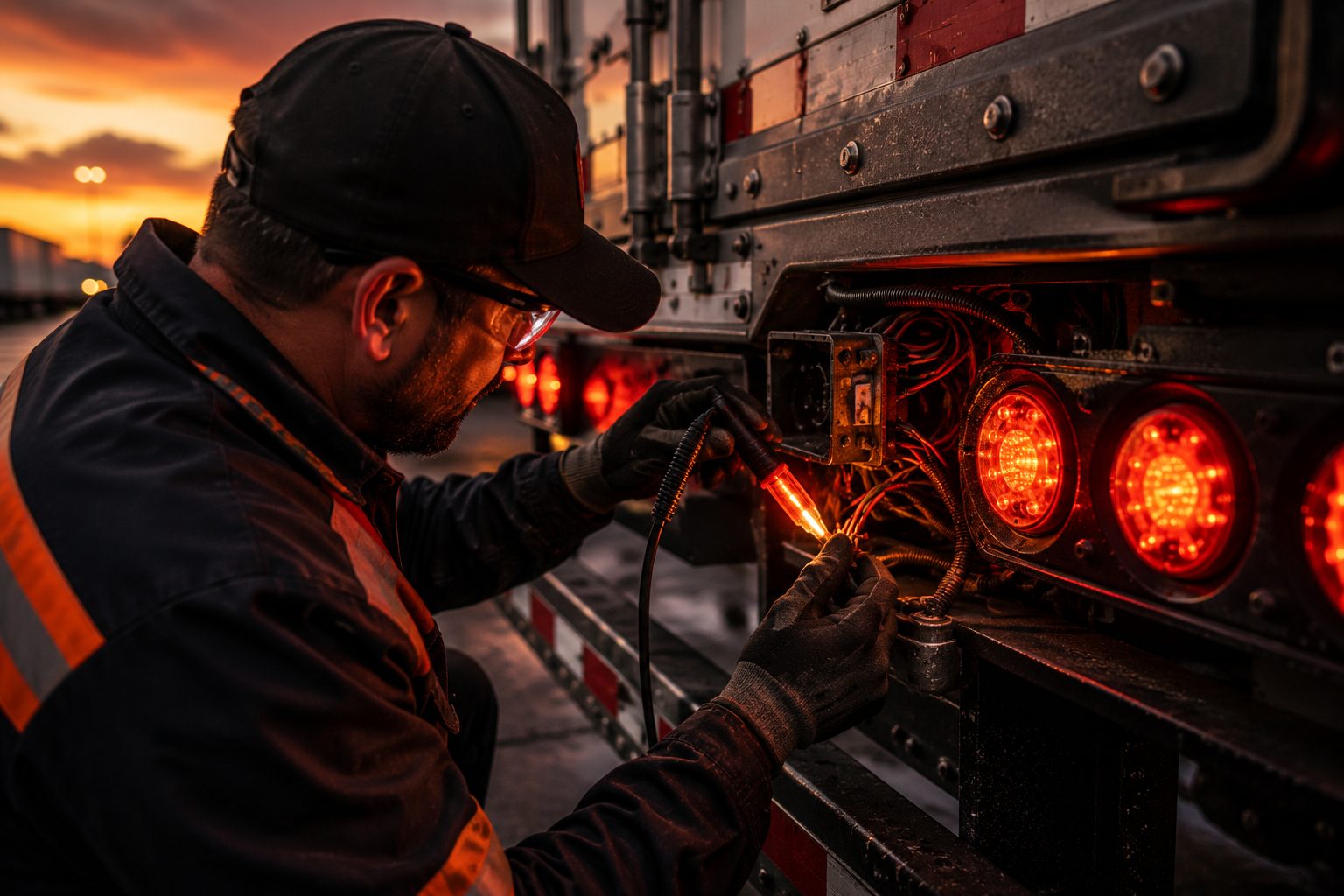
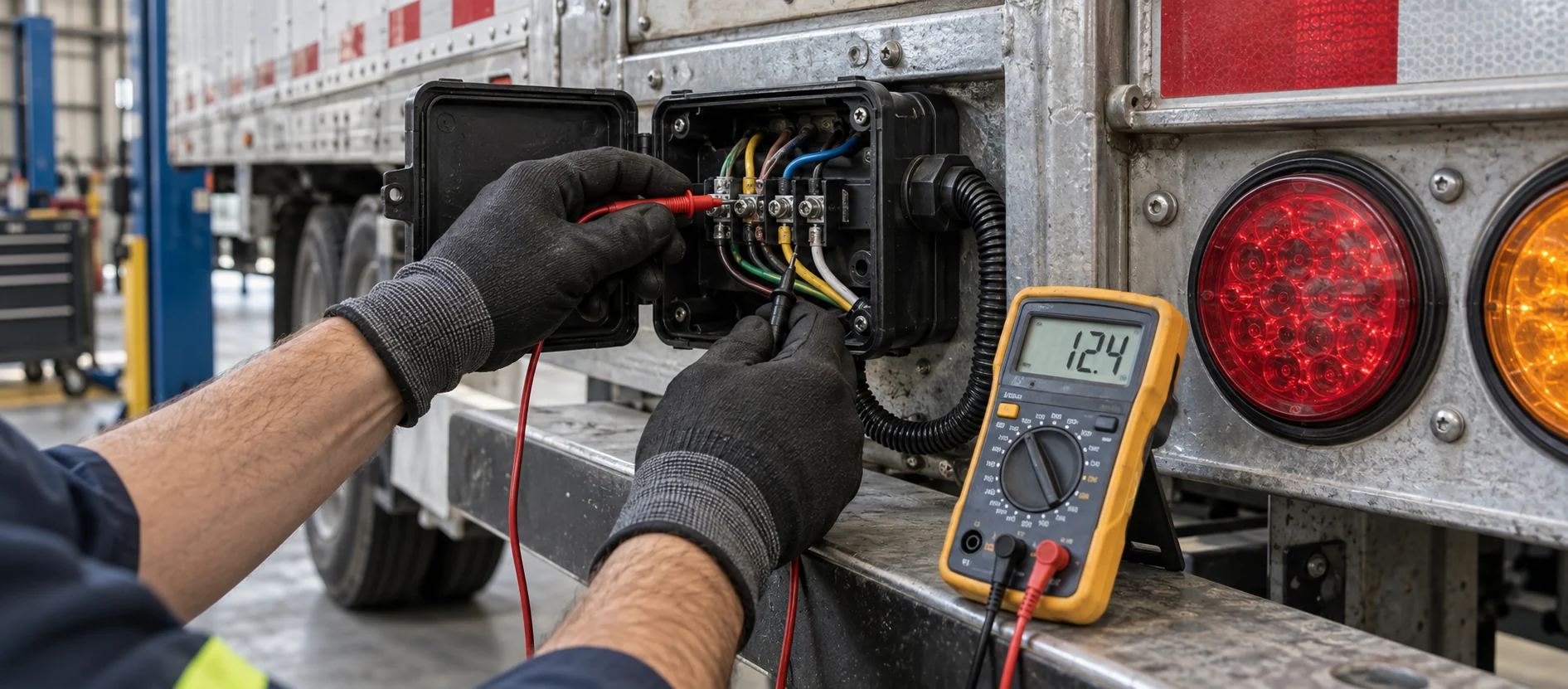
A failed light may be a lamp problem, but repeated or grouped failures often point to the circuit feeding it. Damaged wiring, poor grounds, corrosion, moisture, loose terminals, rubbed insulation, broken connectors, failed protection devices, or a damaged 7-way connection can interrupt power or create an intermittent fault. Testing should determine whether the problem begins on the trailer, at the connection, or on the tractor side.
What Causes Trailer ABS Warning Lights?
The trailer ABS lamp can identify a current or stored fault involving a wheel-speed sensor, sensor position, wiring, connectors, tone ring, power supply, ground, or an ABS component. A warning lamp is a starting point, not a complete diagnosis. Reading available diagnostic information and testing the indicated circuit helps avoid replacing a good component while the actual wiring or connection fault remains.
Ride, Tracking & Tire Life
What Causes Trailer Suspension Problems?
Suspension problems can develop from worn pivot bushings, loose fasteners, broken springs, leaking or damaged air bags, failed shocks, incorrect ride height, corrosion, axle movement, overloading, uneven loading, or collision and curb impact. Drivers may notice leaning, poor tracking, a change in ride height, new noise, instability, or accelerated tire wear.
Worn Bushings
Excess movement can affect tracking, stability, alignment, and connected hardware.
Springs or Air Bags
Cracks, leaks, impact, overextension, age, or incorrect height can affect load support.
Loose Hardware
Mounting fasteners and connections can loosen, wear, shift, or damage surrounding parts.
Ride-Height Problems
Incorrect height can change suspension geometry, component travel, and load sharing.
Axle Alignment
Movement, wear, impact, or incorrect setup can change tracking and tire scrub.
Load & Application
Overloading, uneven loading, rough yards, curbs, and severe duty increase stress.
What Causes Trailer Tire Wear?
Uneven tire wear is evidence, not a diagnosis by itself. Incorrect or mismatched pressure, tire pairing, axle alignment, worn suspension parts, wheel-end looseness, brake drag, balance, overloading, uneven loading, road conditions, and the trailer's application can all shape the pattern. A complete inspection compares tire positions and checks the related systems before recommending only a tire replacement.
Why correcting the cause matters
If a tire is replaced without correcting inflation, alignment, suspension, axle, bearing, brake, or loading issues, the new tire may develop the same wear. Tracking the location and pattern gives the technician useful context for the mechanical inspection.
Why Do Trailer Doors Stop Working Properly?
Swing and roll-up doors depend on aligned openings, secure mounting points, and serviceable hinges, rollers, tracks, cables, springs, latches, locks, and seals. Cargo contact, dock impact, corrosion, repeated forcing, worn hardware, floor damage, or structural movement can make a door bind, sag, leak, or fail to latch.
Replacing a latch may not solve a door that is out of square. The inspection should include the surrounding frame, header, posts, floor, hinges or tracks, and the pattern of gaps around the opening.
When Does a Trailer Need Axle Repair?
Investigate unusual tire wear, poor tracking, vibration, wheel-end heat, lubricant loss, looseness, humming or grinding, damaged spindles, visible axle damage, or a change after curb or collision impact. These symptoms may involve the axle, alignment, suspension, brake, bearing, hub, seal, wheel, or tire.
Measurements and disassembly may be required to decide whether the correct repair is alignment, component service, spindle or wheel-end work, structural correction, or axle replacement.
Match the Response to the Risk
Which Trailer Warning Signs Mean Stop and Get Help Now?
A warning sign is evidence to investigate, not a diagnosis. The safest next step depends on severity, operating conditions, carrier policy, and a qualified assessment. If a problem appears while moving, avoid sudden maneuvers, find the safest available place to stop, and follow company and roadside-authority instructions. Do not crawl under the trailer, touch a hot wheel end, approach moving traffic, or stand where a damaged component or load could shift.
Stop safely and request immediate evaluation
Treat smoke, fire, a burning odor, rapid air-pressure loss, reduced braking, a loose or visibly damaged wheel, exposed tire cords, extreme wheel-end heat, a collapsed or displaced suspension component, a structural crack, a dragging part, leaking cargo, a shifted load, or a door that cannot secure as urgent. These conditions can worsen without warning. The unit may require mobile service, specialized recovery, emergency response, or an in-shop inspection; the scene and diagnosis determine which.
Arrange a prompt inspection
An ABS warning, intermittent required lamp, slow air loss, new vibration or pulling, a developing tire-wear pattern, lubricant seepage, recurring fuse failure, door misalignment, or a new suspension noise may not identify an immediate failure, but it should not be ignored until the next annual inspection. Report it before dispatch so a qualified person can decide whether the trailer must be held, repaired promptly, or scheduled under the fleet's maintenance policy.
What details help determine the next step?
Record the unit number, location, loaded or empty status, what changed, when it began, road or weather conditions, warning lights, visible damage, and any recent impact or repair. Note whether the symptom is constant, changes with braking or speed, or appeared after coupling, loading, or a curb strike. Take photos only from a safe position. When calling, ask whether the unit should remain parked, whether the site can support mobile work, and whether towing or specialized recovery is needed. Do not move equipment simply because a warning light turns off or a noise stops; recurring symptoms still need an explanation.
Shop or Mobile Service?
When Should a Trailer Be Taken to a Repair Shop?
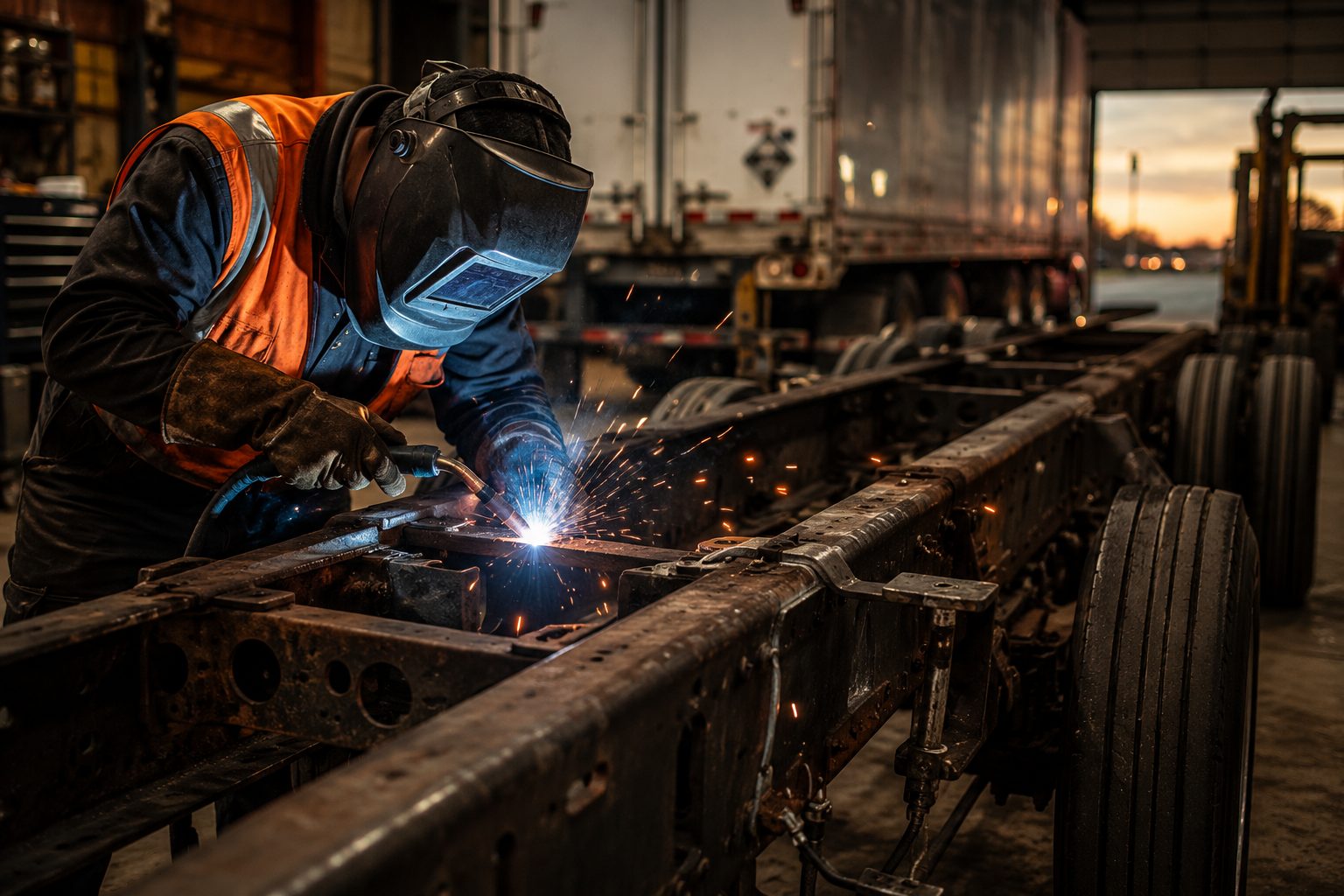
A repair shop is generally the better setting when diagnosis or repair requires lifting the unit, controlled access, fabrication, measurements, extensive disassembly, specialized tools, or several related systems to be checked together. It also gives technicians a safer environment for structural work, major door or floor repairs, axle and alignment concerns, and complicated electrical faults.
A safety-critical brake, wheel-end, tire, suspension, or coupling concern
A recurring fault that returned after a previous repair or parts replacement
Structural, collision, frame, floor, crossmember, or major door damage
Axle, alignment, spindle, bearing, hub, seal, or severe tire-wear concerns
Extensive or intermittent wiring damage requiring controlled circuit testing
A problem that cannot be safely accessed, stabilized, or completed on-site
Mobile service can still be useful for accessible diagnostics and repairs at yards, docks, and eligible roadside locations during business hours. The decision depends on the location, working conditions, trailer stability, scope, parts, and equipment required. A clear description of the symptoms and location helps the repair provider recommend the safest next step.
Local Trailer Repair Support
Semi-Trailer Repair Near Ellenwood and Atlanta
JC Trailmaster's Ellenwood shop supports fleets and owner-operators working throughout Atlanta and the surrounding service area. In-shop service is suited to structural work, wheel-end teardown, alignment concerns, fabrication, and faults that need controlled testing or extended access to the unit. Eligible mobile calls can be discussed during business hours.
JC Trailmaster provides trailer and chassis service from its Ellenwood location at 5225 John G Glover Ind Ct. Call with the trailer type, location, symptoms, load status, warning lights, recent repairs, and any photos that can be taken safely. The team can discuss in-shop service or eligible mobile repair based on the actual problem and current availability.
Areas We Serve
Diagnosing Common Trailer Problems
Semi-Trailer Problem and Repair FAQs
What are the most common semi-trailer problems?
Common semi-trailer problems involve brakes and air systems, tires and wheel ends, suspension and axles, lighting and ABS electrical systems, doors, floors, landing gear, and structural components. The exact pattern depends on trailer type, age, duty cycle, operating conditions, loading, maintenance history, and previous damage.
What are the signs of bad trailer brakes?
Warning signs can include longer stopping distance, pulling, dragging, grinding or squealing, unusual heat, smoke or odor, pressure loss, an audible air leak, poor brake application or release, visible wear, and an ABS warning. A symptom may involve the brake, air, electrical, wheel-end, or adjustment system, so diagnosis should examine the related components together.
What causes trailer air leaks?
Air can escape through damaged or abraded hoses, loose fittings, worn seals, brake chambers, valves, reservoirs, drain components, gladhands, or connections. Vibration, corrosion, road debris, rubbing, weather, age, and previous repairs can contribute. The leak should be located and the complete affected circuit evaluated before selecting a repair.
Why aren't my trailer lights working?
Possible causes include failed lamps, damaged wires, a poor ground, corrosion, moisture, loose connectors, damaged 7-way connections, failed switches or relays on the tractor side, blown protection devices, or physical damage near the rear and side lamps. Testing power, ground, and circuit continuity helps separate a trailer fault from a tractor or connection problem.
What causes trailer ABS warning lights?
A trailer ABS warning can be triggered by wheel-speed sensor position or damage, wiring and connector faults, tone-ring problems, power or ground issues, damaged components, or a stored fault in the ABS system. The lamp identifies a condition that needs diagnosis; it does not by itself prove which component failed.
What causes trailer suspension problems?
Suspension problems may result from worn pivot bushings, loose or damaged fasteners, broken springs, leaking or damaged air bags, failed shocks, incorrect ride height, alignment changes, axle movement, corrosion, impact damage, overloading, or uneven loading. Tire wear, poor tracking, leaning, noise, and instability can be related symptoms.
What causes trailer tire wear?
Tire wear can be influenced by incorrect or mismatched inflation, alignment, worn suspension components, axle position, wheel-end condition, brake drag, tire pairing, overloading, uneven loading, road conditions, and the trailer's application. The wear pattern is useful evidence, but the underlying systems should be inspected before assuming one cause.
What causes trailer doors to stop working properly?
Door problems commonly involve worn hinges, rollers, tracks, cables, springs, latches, locks, seals, or mounting points. Impact damage, floor or frame movement, corrosion, cargo contact, and repeated forcing can also move the opening out of alignment. The door and surrounding structure should be checked before hardware is adjusted or replaced.
When does a trailer need axle repair?
Axle or wheel-end inspection is appropriate when a trailer shows unusual tire wear, poor tracking, visible axle or spindle damage, bearing looseness, lubricant loss, abnormal heat, vibration, humming or grinding, brake-related heat, or a change after impact. Accurate diagnosis may require measurements and component disassembly before repair or replacement is recommended.
When should a trailer be taken to a repair shop?
Use a qualified repair shop for safety-critical concerns, recurring faults, extensive electrical damage, structural or collision repair, fabrication, axle or alignment work, wheel-end problems, major door or floor damage, and work requiring lifting, controlled access, measurements, or specialized equipment. Mobile service may fit some accessible repairs, but the safest setting depends on the location and scope.
Plan Ahead
How Often Should Commercial Trailers Be Inspected and Maintained?
See how annual inspections, driver observations, defect reporting, and preventive maintenance work together to find these problems earlier.
Read the trailer inspection and maintenance guide →25+
Years of Experience
10,000+
Repairs Completed
Insured
DOT Registered
#3782640
USDOT